 Book Appointment
1. Cleared for, versus marketed for
“FDA-cleared” means a device has been through a regulatory process and assessed for particular uses. Those uses are specific and written down.
What a device is marketed for is a much longer list, and it is assembled by people who are selling something. Asking which of the two you are being told about is one of the most useful questions a patient can ask in this category.
2. SkinPen®’s cleared indications
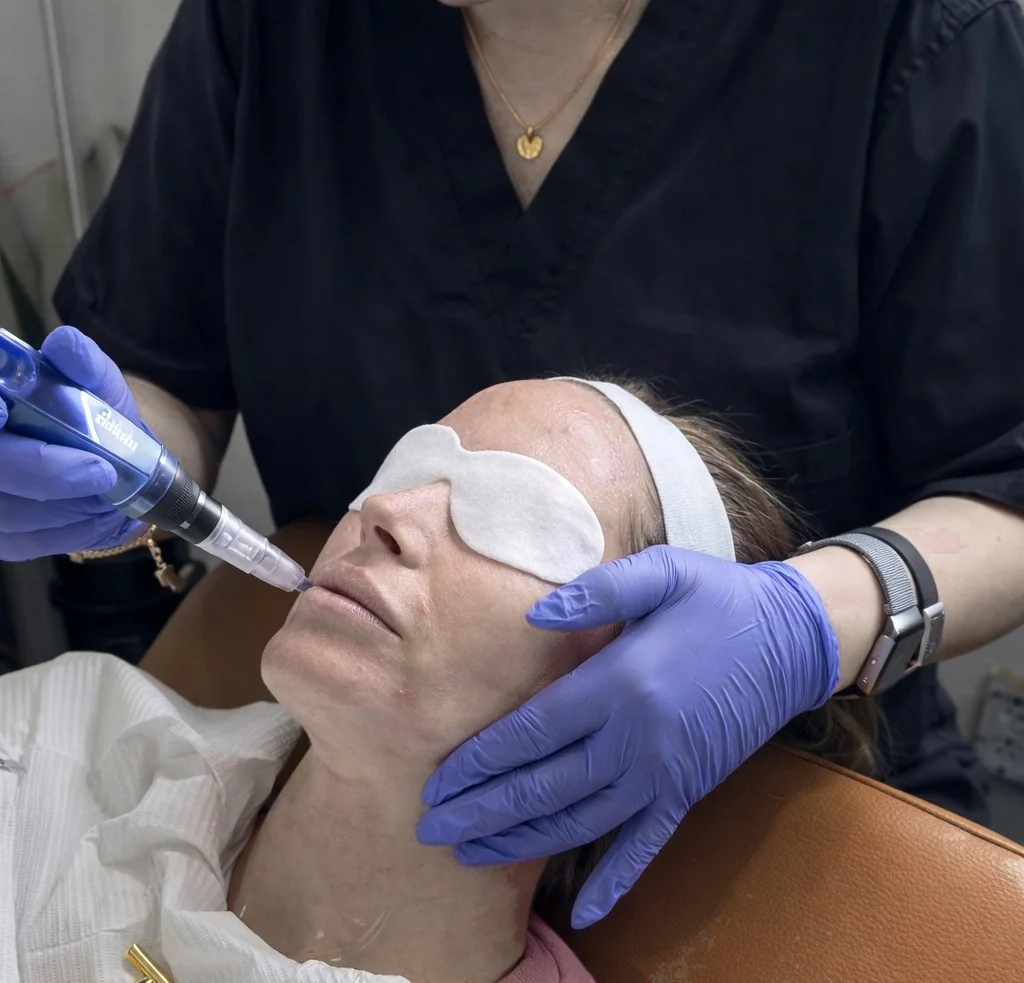
SkinPen® is a microneedling device used for FDA-cleared indications, including improving the appearance of facial acne scars in adults, and — for appropriate Fitzpatrick skin types — improving the appearance of neck wrinkles.
That is a narrower list than most microneedling marketing implies, and it is a useful anchor. If your concern is acne scarring, this is a treatment with a specific, assessed indication behind it.
Treatment suitability is still determined through individualized assessment. A cleared indication tells you what the device has been assessed for; it does not tell you whether it is right for you.
3. How microneedling works
It is a minimally invasive skin-rejuvenation treatment that creates controlled micro-injuries in the skin. Those prompt the skin’s natural healing and collagen-remodelling response, which is where any improvement in the appearance of scarring or texture comes from.
The mechanism explains two things people are often surprised by: the improvement is gradual, because remodelling takes time; and it is usually discussed as a course rather than a single session.
4. A course, not an appointment
Because the response is a healing response, treatments are spaced to allow it to happen. How many sessions, and how far apart, is individualized — it depends on the concern, the skin and how you respond as you go.
Judging the result after one session is judging it too early.
5. Adding PRP
PRP microneedling combines the treatment with platelet-rich plasma derived from your own blood, drawn and prepared at your appointment and incorporated into selected individualized skin-rejuvenation plans.
Whether adding PRP is appropriate is a separate decision from whether microneedling is, and it is made at assessment rather than offered as an upgrade.
6. Where it may not be the answer
Microneedling is not a universal treatment. Active skin infection, certain skin conditions, some medical histories and some medications all matter, and Fitzpatrick skin type is relevant for particular indications.
This is exactly why the practice assesses rather than books straight in, and why you will not find a fixed protocol published here. The protocol is the part that gets decided about you.
7. Questions worth asking
- Is what you are recommending a cleared indication for this device, or an off-label use? Both can be legitimate — you should simply know which.
- How many sessions are you anticipating, and when would we review whether it is working?
- What would make you say this is not the right treatment for me?