
 Book Appointment
1. Hair loss is not one condition
Pattern hair loss, hair loss related to hormonal change, loss following illness or stress, loss related to nutritional deficiency and loss caused by how hair is worn or treated are different problems. Some are self-limiting. Some are progressive. Some respond to treatment aimed at the cause rather than at the scalp.
Treating all of them with the same thing because that thing is what is on offer is how people end up spending money without improving.
2. What the assessment looks at
- The pattern — where hair has thinned, and in what shape.
- How long it has been happening, and whether it came on gradually or suddenly.
- Your medical history, medications and any recent illness or significant stress.
- Family history, which is relevant for pattern hair loss in particular.
- Laboratory testing where it is appropriate to look for a contributing cause.
The point of all of it is to work out what is driving the loss before deciding what, if anything, to do about it.
3. Regenerative options
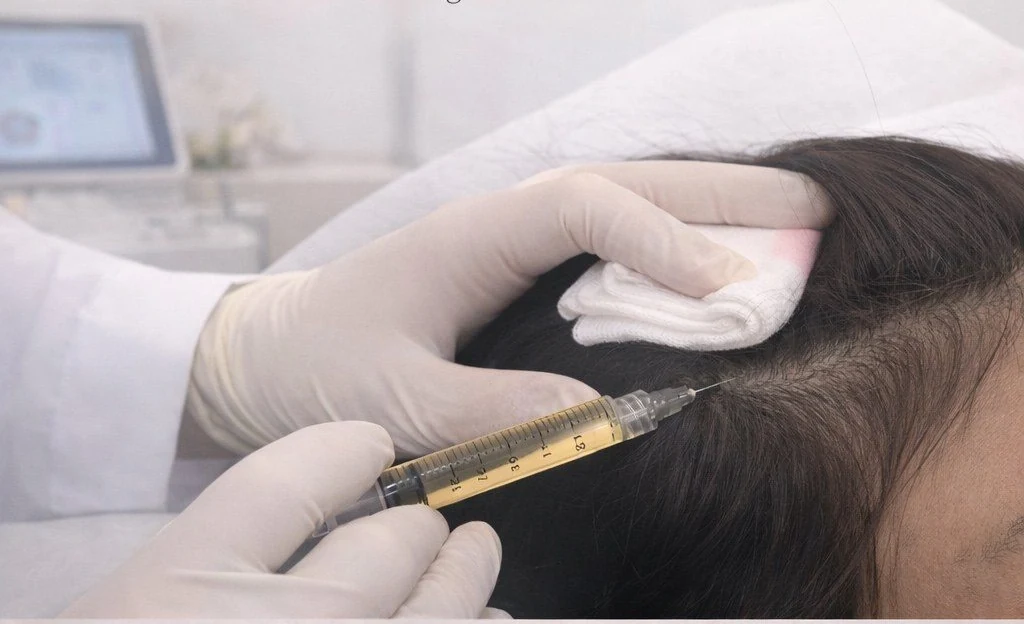
PRP and PRF — preparations made from a sample of your own blood at your appointment — are among the options considered for appropriate candidates within an individualized plan.
They are considered after the assessment, for the causes where they are relevant, and as part of a plan rather than as the plan. Whether they are appropriate for you, and over what period, is determined at consultation.
4. On exosome-based products
Exosome-based products are marketed heavily in this space, and the claims made for them frequently run well ahead of what is established.
This practice’s position is deliberately conservative: the intended use, regulatory status and sourcing of any such product should be established before it is offered or marketed, and no claim should be made that these products cure disease, reverse ageing, regenerate tissue or guarantee hair growth. If you have been told otherwise somewhere else, that is worth knowing about the source rather than about the product.
5. Time frames, and what to expect
Hair grows slowly, and any treatment aimed at it is judged over months rather than weeks. A plan that promises a visible change quickly is promising something hair biology does not deliver.
Results vary by individual, and no specific outcome is guaranteed. Some causes of hair loss respond well to treatment; some are managed rather than reversed; and for some, the honest answer is that the realistic goal is slowing further loss rather than regrowth.
6. Questions worth asking
- What do you think is causing my hair loss, and what led you to that?
- Is the goal here regrowth, or slowing further loss? Be specific.
- When would we review whether this is working, and what would change if it is not?
- What is the evidence for what you are recommending?